


Privacy Policy | Terms of Use | Cookie Policy | Disclaimer
Empowering the American middle class — one story at a time.
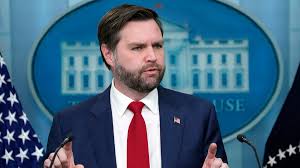
Vice President J.D. Vance
James David Vance serves as the 50th Vice President of the United States, assuming office in January 2025 alongside President Donald J. Trump. His rise to national leadership reflects a uniquely American story—one shaped by hardship, service, education, and a deep connection to the struggles of working families across the country.
Vice President Vance is widely known for his firsthand understanding of economic hardship in America. Raised in a working-class family, he experienced the challenges faced by many communities struggling with job loss, addiction, and declining opportunity. These early life experiences helped shape his views on economic mobility, personal responsibility, and the role of government in supporting—not replacing—strong families and local communities.
Before entering public office, Vance served in the United States Marine Corps, an experience that reinforced his commitment to service, discipline, and national security. Following his military service, he earned a law degree from Yale Law School, where he developed a deeper understanding of the legal and economic systems that influence American life. His background uniquely bridges the worlds of military service, higher education, and working-class values.
Vance later built a successful career in business and entrepreneurship, gaining insight into the challenges facing American workers, startups, and small businesses. His experience in the private sector informs his views on job creation, innovation, and economic competitiveness in an increasingly global economy. These perspectives have shaped his approach to public service and policymaking.
Prior to becoming vice president, Vance represented the state of Ohio in the United States Senate. During his time in Congress, he focused on issues affecting middle-class Americans, including wages, manufacturing, trade, veterans’ affairs, and the impact of globalization on American workers. His legislative work emphasized strengthening domestic industry and restoring economic opportunity in regions left behind by decades of change.
As Vice President, Vance plays a key role in advising the president, supporting legislative priorities, and representing the United States both domestically and internationally. He also serves as President of the Senate, where he may cast tie-breaking votes on critical legislation. His position places him at the center of national decision-making during a time of economic transition and global competition.
Vice President Vance’s leadership reflects a broader conversation about the future of the American middle class. His life story and public service highlight the importance of opportunity, resilience, and accountability. As the nation looks ahead, his role underscores ongoing efforts to address economic inequality, strengthen American industry, and ensure that working families are not left behind.
Vice President Vance has also emphasized the importance of restoring trust in American institutions. He has spoken about the need for transparency, accountability, and fairness in government, particularly as many citizens feel disconnected from decision-makers in Washington. His approach reflects an effort to reconnect leadership with the everyday concerns of working Americans, including rising costs, job security, and community stability.
In addition to domestic priorities, Vice President Vance plays a role in shaping America’s approach to international relations. He supports policies aimed at protecting national interests, strengthening alliances, and ensuring that global engagement benefits American workers and families. As global competition intensifies, his focus remains on maintaining economic strength at home while preserving the nation’s security and independence abroad.