

Benjamin Franklin, The Way to Wealth, 1758
“Industry and Frugality are the Means of procuring Wealth.”
Workforce&Careers

Homestead © 2026 My Middle Class America
Privacy Policy | Terms of Use | Cookie Policy | Disclaimer
Empowering the American middle class — one story at a time.
Privacy Policy | Terms of Use | Cookie Policy | Disclaimer
Empowering the American middle class — one story at a time.
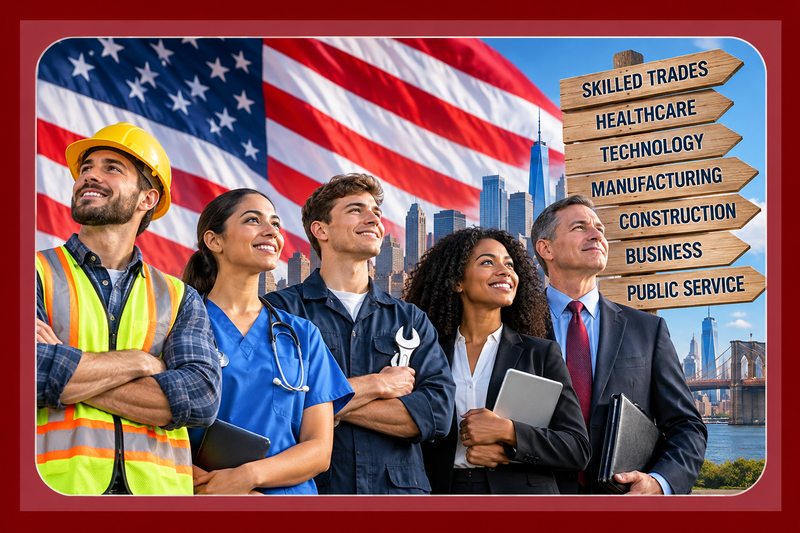
Workforce & Careers in America
America's workforce has played a central role in building the nation's economy. From agriculture and manufacturing to healthcare, construction, technology, and professional services, American workers contribute the skills and knowledge that keep communities and businesses operating.
For generations, steady employment and opportunities for career advancement have helped families achieve financial independence, purchase homes, and build a secure middle-class life.
The Changing American Workforce
The American job market has changed significantly over time. Manufacturing once provided millions of workers with stable employment, while the growth of healthcare, technology, transportation, and service industries has created new career opportunities.
Today, automation, artificial intelligence, and global competition continue to influence the types of jobs available and the skills employers.
Career Opportunities Beyond College
A successful career does not always require a four-year college degree. Electricians, plumbers, mechanics, welders, technicians, healthcare workers, and other skilled professionals perform essential work throughout the economy.
Apprenticeships, vocational schools, community colleges, and employer-sponsored training programs offer practical pathways into many of these occupations.
The Importance of Career Development
Career advancement often requires continuing education, practical experience, and the willingness to learn new skills. Workers who develop adaptable abilities may be better prepared to respond to changes in technology and employment opportunities.
A strong American workforce depends on access to training, fair employment practices, and opportunities for individuals to build productive and financially secure careers.
Job Security, Wages, and Career Advancement
The Importance of Stable Employment
Stable employment is an important foundation of middle-class financial security. A dependable income helps American families manage housing expenses, healthcare costs, transportation, education, and retirement savings.
However, changes in technology, business conditions, and international competition can affect employment stability. Workers may experience layoffs, reduced hours, or the need to transition into different occupations.
Wages and the Cost of Living
Earning a reasonable income does not always guarantee financial security. Housing, groceries, insurance, utilities, and transportation expenses can consume a substantial portion of household earnings.
Workers often evaluate career opportunities not only by salary but also by health insurance, retirement benefits, job stability, working conditions, and opportunities for advancement.
Apprenticeships and Skilled Trades
Skilled trades remain essential to the American economy. Electricians, plumbers, carpenters, HVAC technicians, machinists, and industrial maintenance specialists help build and maintain the nation's infrastructure.
Registered apprenticeship programs combine paid employment with classroom instruction, allowing participants to gain practical experience while developing occupational skills.
Changing Careers and Learning New Skills
Career changes have become an important part of modern employment. Some Americans pursue new occupations because of technological changes, while others seek higher wages, better working conditions, or greater personal satisfaction.
Community colleges, vocational programs, professional certifications, and employer-sponsored training can provide opportunities for workers to develop new skills without necessarily pursuing a traditional four-year degree.
Protecting the Future of American Workers
Maintaining a skilled and adaptable workforce requires cooperation among employers, educational institutions, workers, and government agencies.
Access to reliable career information, affordable training, safe working conditions, and opportunities for advancement can help Americans prepare for changing employment demands.