

Thomas Jefferson, March 31, 1809
“The care of human life and happiness, and not their destruction, is the first and only legitimate object of good government.”
Workers Rights & Protections

Homestead © 2026 My Middle Class America
Privacy Policy | Terms of Use | Cookie Policy | Disclaimer
Empowering the American middle class — one story at a time.
Privacy Policy | Terms of Use | Cookie Policy | Disclaimer
Empowering the American middle class — one story at a time.
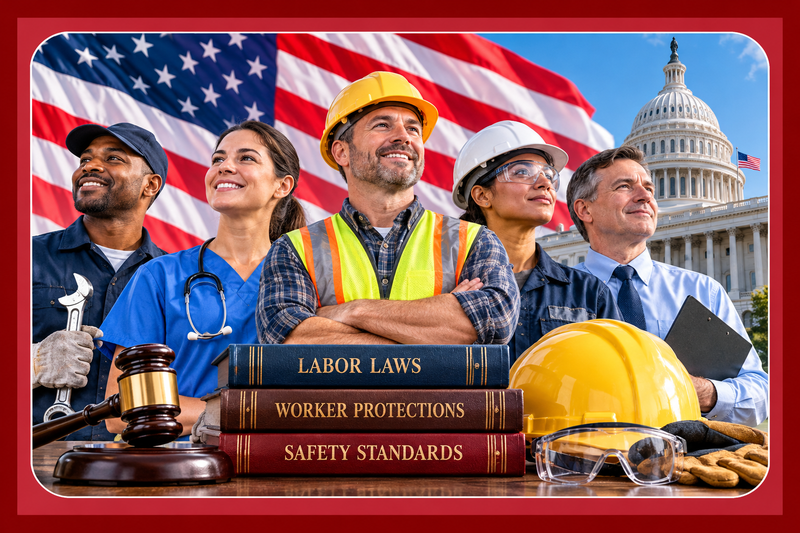
Workers' Rights and Protections in America
American workers have played a central role in building the nation's economy. From factories and construction sites to hospitals, offices, and small businesses, millions of Americans depend on safe working conditions, fair compensation, and protection against unlawful employment practices.
Over time, federal and state governments have established laws designed to protect employees, regulate working conditions, and establish minimum standards for employers. These protections have become an important part of America's employment system and the economic security of middle-class families.
The Development of American Labor Laws
During the Industrial Revolution, many American workers faced long working hours, dangerous machinery, low wages, and limited workplace protections. Industrial accidents, child labor, and difficult factory conditions contributed to growing demands for labor reform.
Throughout the twentieth century, Congress enacted major legislation addressing workplace conditions and employee rights.
The Fair Labor Standards Act of 1938 established federal minimum wage, overtime, recordkeeping, and child labor standards for covered employment.
The Occupational Safety and Health Act of 1970 established a federal framework for protecting workers from recognized workplace hazards and created the Occupational Safety and Health Administration (OSHA).
The Civil Rights Act of 1964, particularly Title VII, prohibited employment discrimination based on race, color, religion, sex, or national origin for covered employers.
Federal Agencies That Protect American Workers
Several federal agencies administer and enforce important workplace protections.
U.S. Department of Labor (DOL): Oversees various federal employment laws involving wages, working conditions, benefits, and workforce programs.
Occupational Safety and Health Administration (OSHA): Establishes and enforces workplace safety and health standards and provides guidance to employers and employees.
Equal Employment Opportunity Commission (EEOC): Enforces federal laws prohibiting certain forms of employment discrimination, harassment, and retaliation.
National Labor Relations Board (NLRB): Enforces federal labor law protecting covered employees' rights to organize, engage in protected collective activity, and bargain collectively.
Why Workers' Rights Matter
Workplace protections help establish minimum standards for employment while providing legal remedies when covered employers violate applicable laws.
For American families, dependable wages, safe workplaces, and fair employment practices contribute to financial stability and opportunities for long-term economic advancement.
Understanding these rights allows workers and employers to make informed decisions about their responsibilities under federal and state law.
Wages, Overtime, and Workplace Safety
Federal Minimum Wage Protections
The Fair Labor Standards Act (FLSA) establishes minimum wage requirements for covered employees throughout the United States.
The federal minimum wage is $7.25 per hour. Many states and local governments have established higher minimum wages. When federal and state minimum wage laws both apply, employees are generally entitled to the higher applicable rate.
Certain occupations and employment arrangements may be subject to special rules or exemptions.
Overtime Pay and Working Hours
Under the FLSA, covered, nonexempt employees generally must receive overtime compensation of at least one and one-half times their regular rate of pay for hours worked beyond 40 in a workweek.
Not every salaried employee is automatically exempt from overtime requirements. Eligibility depends on applicable legal standards, including job duties and compensation.
Federal law generally does not require overtime simply because an employee works more than eight hours in one day, although some state laws provide additional protections.
Workplace Safety and OSHA
The Occupational Safety and Health Act requires covered employers to provide workplaces free from recognized hazards that are causing or likely to cause death or serious physical harm.
OSHA establishes and enforces safety standards involving machinery, hazardous substances, electrical equipment, fall protection, and other workplace risks.
Workers generally have the right to receive information about workplace hazards, obtain required safety training, and report unsafe conditions.
Protection Against Retaliation
Federal workplace laws prohibit certain forms of retaliation against employees who exercise legally protected rights.
For example, workers may be protected when they report qualifying safety violations, file wage complaints, participate in investigations, or oppose unlawful employment discrimination.
The protections, filing procedures, and deadlines vary depending on the law involved.
Understanding Your Employment Rights
Employees should understand the laws applicable to their jobs, including wage requirements, overtime eligibility, workplace safety standards, and protections against unlawful employment practices.
Employers also have a responsibility to understand and comply with applicable federal, state, and local employment laws.
Knowledge of workplace rights and responsibilities can help prevent violations, improve working conditions, and support a more secure American workforce.
**Official Government Sources**
U.S. Department of Labor — Fair Labor Standards Act
https://www.dol.gov/agencies/whd/flsa
Occupational Safety and Health Administration — Workers' Rights
https://www.osha.gov/workers
U.S. Equal Employment Opportunity Commission — Retaliation
https://www.eeoc.gov/retaliation